Neko Healthcare Revolution
by Dee Miller
Daniel Ek and Hjalmar Nilsonne spent years quietly trying to rethink the annual health check. Eight years later, Neko Health has raised more than $1 billion, attracted hundreds of thousands of people to its waiting list and opened its first clinic in New York.
In 2018, Spotify founder Daniel Ek sent Hjalmar Nilsonne a direct message asking if he wanted to build a healthcare company with him.
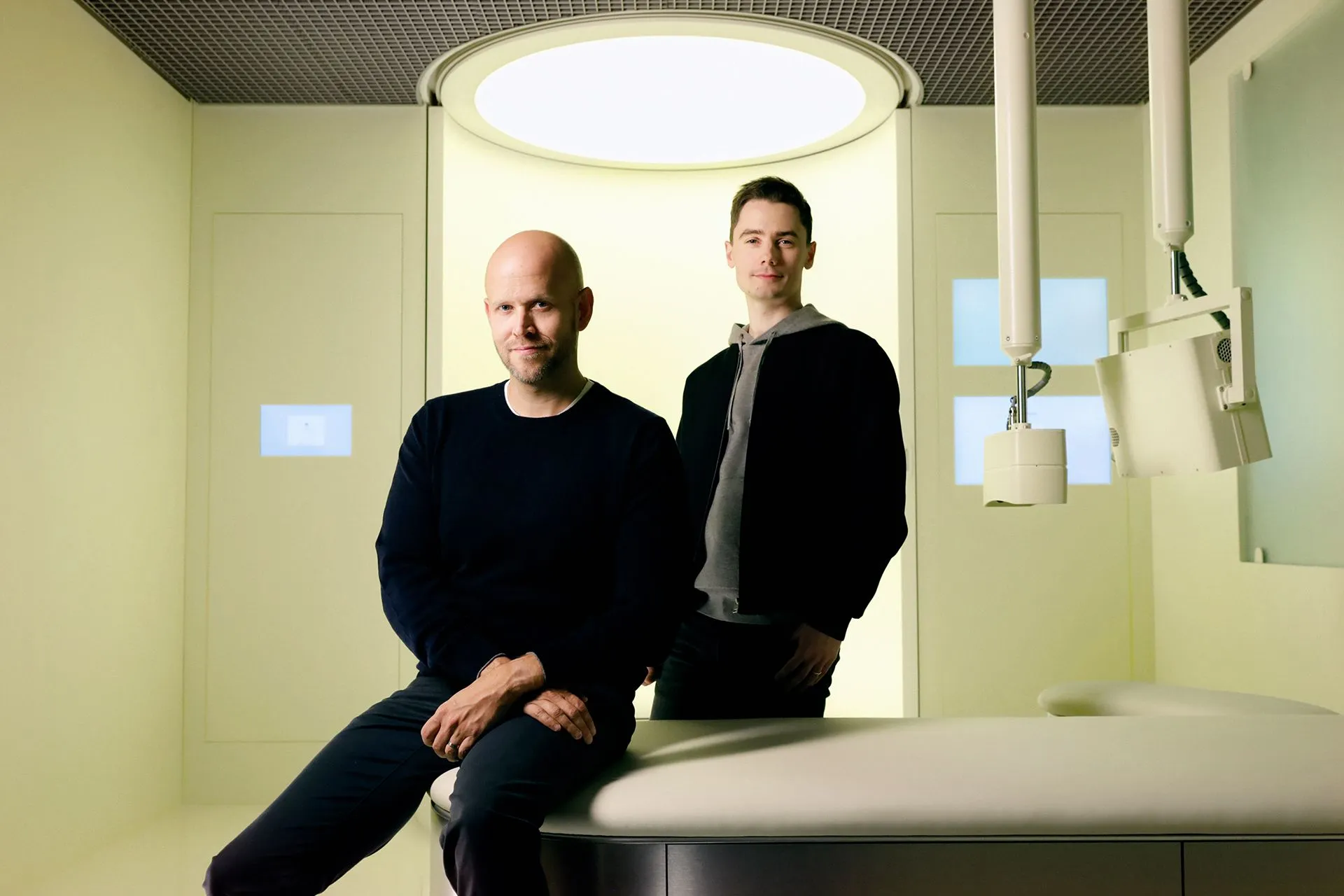
The two had never met.
Nilsonne, an engineer who had spent close to a decade working in climate and energy technology, was initially sceptical. Neither founder was a doctor, and taking on healthcare was considerably more complicated than launching another software company.
But Ek kept pushing.
The question that eventually pulled Nilsonne in was simple: if the healthcare system did not already exist and you were designing it today, what would it look like? Neko says that question became the foundation for the company.
Their answer was to build around prevention rather than waiting until someone became ill.
Neko Health was founded in 2018 and then spent roughly four years in stealth developing its technology before opening its first health centre in Stockholm in 2023.
Hjalmar Nilsonne: the engineer building it
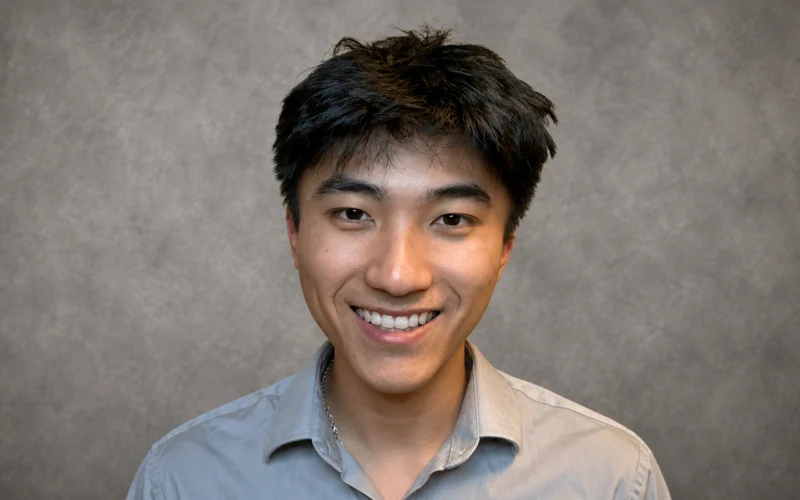
Ek may be the globally recognised name, but Hjalmar Nilsonne is Neko's co-founder and CEO, running the company day to day.
Nilsonne grew up in a family of doctors but chose engineering instead. Before Neko, he co-founded companies in the energy sector and spent years working with sensors, software and large amounts of physical-world data.
That background can be seen throughout Neko.
Instead of assembling an experience entirely from existing medical equipment, the company designs much of its hardware, software and clinical protocols itself. Its health centres combine imaging, cardiovascular measurements, blood analysis and clinician review into a single consumer experience.
The current Neko Health Scan takes around 60 minutes, is non-invasive and radiation-free, and is intended to give members a broad view of areas including cardiovascular, metabolic and skin health.
It is a technology company, but notably, clinicians remain central to the experience.
Daniel Ek: life after Spotify
Then there is Daniel Ek.
Spotify turned Ek into one of Europe's defining technology founders, but healthcare had already been on his radar for years. Before Neko, he had invested in Swedish digital-health company Kry and spoken publicly about his frustration with healthcare systems built largely around treating illness after it occurs. His next company became an attempt to approach that problem directly.
There is also something distinctly Spotify-like about the Neko strategy.
Own the experience. Use technology to remove friction. Make something traditionally complicated feel simple enough that consumers actually want to use it.
With Neko, that philosophy has been applied to the annual health check.
And then everyone wanted one
Perhaps the most interesting part of Neko's growth story is not its scanner.
It is the waiting list.
When Neko released appointments for its first Stockholm centre, every available slot was taken in less than two hours.
When it expanded to London in 2024, more than 22,000 people were already waiting.
By early 2025, the company had completed only around 10,000 scans but had accumulated a waiting list of more than 100,000 people. That demand helped support a $260 million Series B at a $1.8 billion valuation.
Neko has effectively turned scarcity into part of its expansion model.
Rather than opening dozens of expensive physical locations first and then searching for customers, it can build demand ahead of time. A large waitlist tells Neko where customers are, how much capacity it might need and gives a new clinic thousands of potential members before its doors have even opened.
By July 2026, more than 350,000 people had joined a Neko waitlist or registered for a scan, with more than 100,000 people already scanned across Sweden and the UK.
And importantly for a recurring healthcare product, many are coming back.
Neko says 75% of members book and prepay for their next scan after their first appointment, while 80% of people completing a second scan book a third.
The waitlist gets people through the door. Retention is what could make the model considerably more powerful.
From Stockholm to a billion-dollar funding story
The investment followed.
Neko's first external financing arrived in 2023 with a €60 million Series A, led by Lakestar with Atomico and General Catalyst participating. It was the company's first outside funding round.
London followed in 2024.
Then came the $260 million Series B in January 2025, valuing Neko at $1.8 billion and providing the capital to accelerate international expansion.
By 2025 and 2026, Neko was adding more British locations, including Manchester and Birmingham, while preparing for the much bigger prize: America.
Then came the giant round.
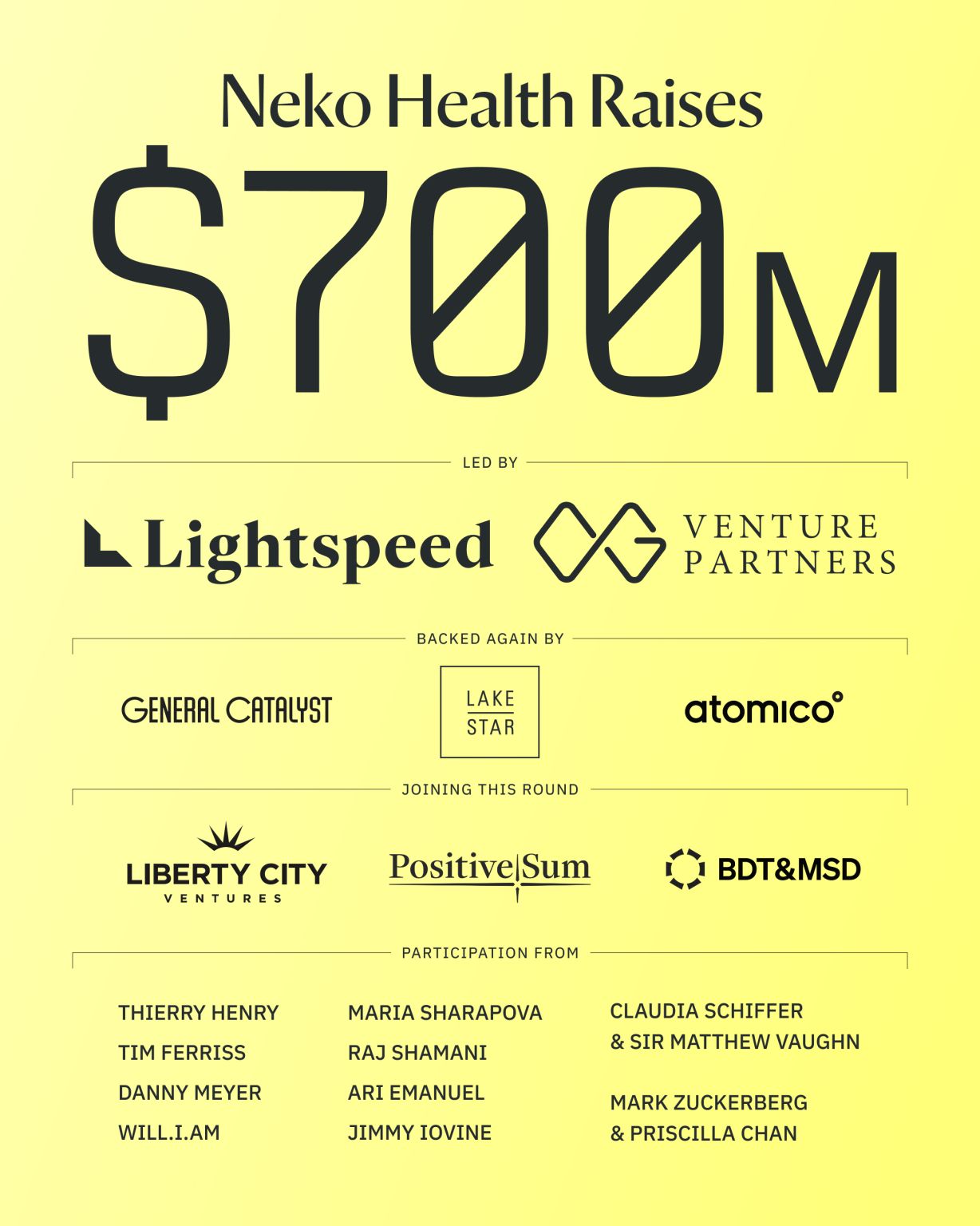
In July 2026, Neko raised $700 million in Series C funding, led by Lightspeed Venture Partners and co-led by O.G. Venture Partners.
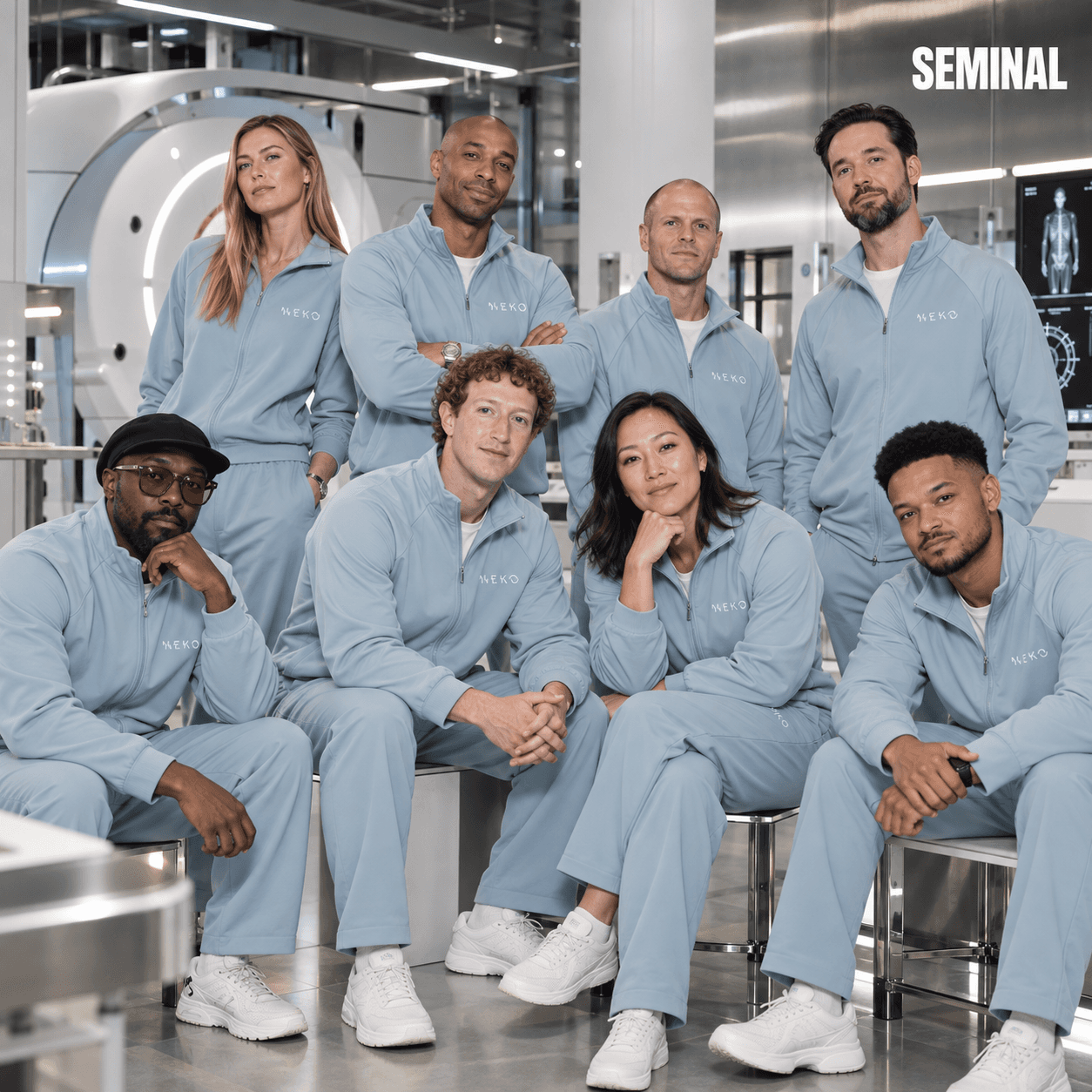
The investor list also began looking less like a normal healthcare cap table and more like a cultural one, with participants including Mark Zuckerberg and Priscilla Chan, Maria Sharapova, Thierry Henry, Claudia Schiffer, Tim Ferriss and will.i.am.
Across its funding rounds, Neko has now raised more than $1 billion.
New York, New York
Now the model has reached America.
On 24 September 2026, Neko opened its first U.S. health centre at 300 Lafayette Street in SoHo, New York.
The one-hour experience costs $499, bringing Neko's Scandinavian preventive-health model into the world's largest healthcare market.
And once again, the company opened with customers already waiting.
More than 25,000 New Yorkers had joined the waitlist before opening day.
New York is intended to be the first of several American markets. Neko says additional NYC locations and Miami are expected next, with Washington, D.C. and San Francisco also planned.
That makes the U.S. expansion the biggest test of the idea so far.
Preventive health screening remains an area with legitimate debate around how much testing is useful, the possibility of false positives and whether more data always translates into better outcomes. Neko's challenge will be proving that its carefully designed consumer experience also produces meaningful long-term clinical value.
But as a growth story, the trajectory is already striking.
An unsolicited DM became five years of product development. One Stockholm clinic became an international network. And a company originally built quietly behind closed doors now has hundreds of thousands of people actively asking to get in.
For Neko, the queue may be becoming as important as the technology itself.

Following SEMINAL on Instagram @Seminal.World
Discover the ideas shaping the future of business.
NEVER MISS A THING!
Subscribe and get freshly baked articles. Join the community!
Join the newsletter to receive the latest updates in your inbox.